Football is massive in Korea. It's not just a sport here — it's one of the few things that can empty out a city's coffee shops and fill up its streets at the same time. And when the World Cup comes around, that energy goes up another level entirely.
You've probably seen the footage even if you've never been here: thousands of people in matching red shirts, packed into city squares, watching a giant screen together. This is street cheering (거리응원) — literally "street” + “cheering" — and it became a national phenomenon during the 2002 World Cup, which Korea co-hosted with Japan. That's also when 붉은 악마 ("Red Devils") became the name for Korea's official supporters' group. The red shirts you see everywhere during the tournament all trace back to them.
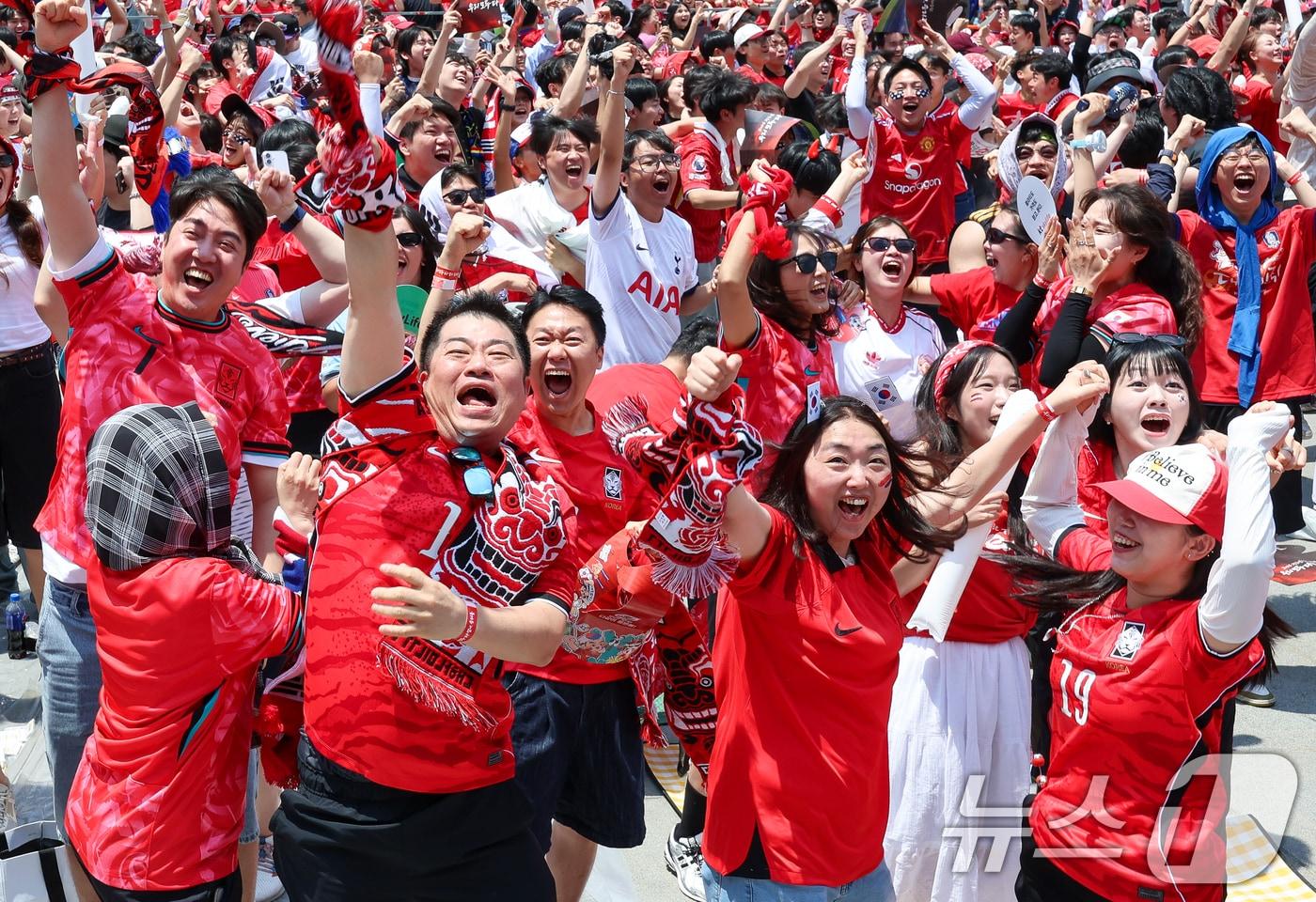
One more thing worth knowing: Koreans call their national team named after its head coach, with 호 (meaning "ship" or "vessel") tacked onto the end. So this year's squad is 홍명보호 ("the Hong Myung-bo ship") and that ship has won its opening match against the Czech Republic, lost to Mexico, and is now heading into a decisive match against South Africa next week.
So if you're learning Korean and the World Cup is on, this is a great excuse to pick up some real, commonly used vocabulary. Let's go through it.
The tournament stages
Worth noting: this World Cup expanded from 32 teams to 48, which means there's a brand-new stage — 32강 — that didn't exist in past tournaments.
조별리그 Group stage. 조 means "group," and 리그 is simply "league" borrowed from English. This is the opening phase where teams play everyone else in their group once.
32강 Round of 32. This one is new for this tournament. 강 here doesn't translate directly — it's a counter used specifically for tournament brackets, and the number in front tells you how many teams are left. So 32강 literally means "the 32-team stage."
16강 Round of 16. Same logic — 16 teams remain.
8강 Quarterfinals. 8 teams remain.
4강 Semifinals. 4 teams remain. You'll also hear this stage called 준결승 — 준 means "semi-" or "quasi-," so 준결승 literally means "semi-final," the more formal counterpart to 4강.
결승 The final. 결 means "decide" and 승 means "victory" — so this word literally means "the match that decides the winner."
"한국이 32강에 진출했어요."
"Korea advanced to the round of 32." (maybe soon???)
진출하다 means "to advance" or "to break through to" — you'll see this verb constantly in World Cup headlines.
The phases of a match
전반전 First half. 전 means "before," 반 means "half," and 전 here means "battle" — so altogether, "the earlier half of the battle."
하프타임 Halftime. This one's a straight loanword from English, just written in 한글.
후반전 Second half. 후 means "after," so this is the mirror image of 전반전.
"후반전에 한국이 두 골을 넣었어요." "
Korea scored two goals in the second half."
연장전 Extra time. 연장 means "extension," so this is literally "the extended battle" — the extra 30 minutes played when a knockout match is tied after 90 minutes.
승부차기 Penalty shootout. 승부 means "victory and defeat" (i.e., "the outcome"), and 차기 means "kicking." So the whole word means something like "kicking to decide the outcome."
"경기가 승부차기까지 갔어요."
"The match went all the way to a penalty shootout."
Talking about what happens on the field
동점골 Equalizer. 동점 means "equal score," and 골 is just "goal," borrowed from English. Put together, it's the goal that brings the score level.
"황인범의 동점골입니다!"
"It's Hwang In-beom's equalizer!"
역전승 A come-from-behind win. 역전 means "reversal," and 승 means "victory"
"대한민국이 체코를 상대로 역전승을 거뒀습니다."
"South Korea pulled off a come-from-behind win against the Czech Republic."
What you'll actually hear and shout
골! 골이에요! "Goal! It's a goal!" This is the single most common thing you'll hear a Korean commentator yell the instant the ball goes in. 골 is the borrowed English word "goal," and 골이에요 just adds "it is" to make it a full exclamation.
슛! "Shoot!" Just as common as 골, you get it.
Finally, the chant you’ll hear, similar to how, at least in the US, you have “USA! USA!”, Koreans have: 대~한민국! 짝짝 짝짝 짝! Born during the 2002 tournament and still used today at every match, big screen, and street cheering event. 대한민국 means "Republic of Korea," but it's stretched out — 대~한민국 — to match the rhythm of the clap. The 짝짝 짝짝 짝 is the onomatopoeia for the claps themselves, in the rhythm clap-clap-clap, clap-clap.